Clean the
damn
streets
My mother-in-law and her friends walk Victoria Street most mornings with gloves on and a bin bag between them. They call themselves the Pickup Girls. They think it’s funny. It isn’t.
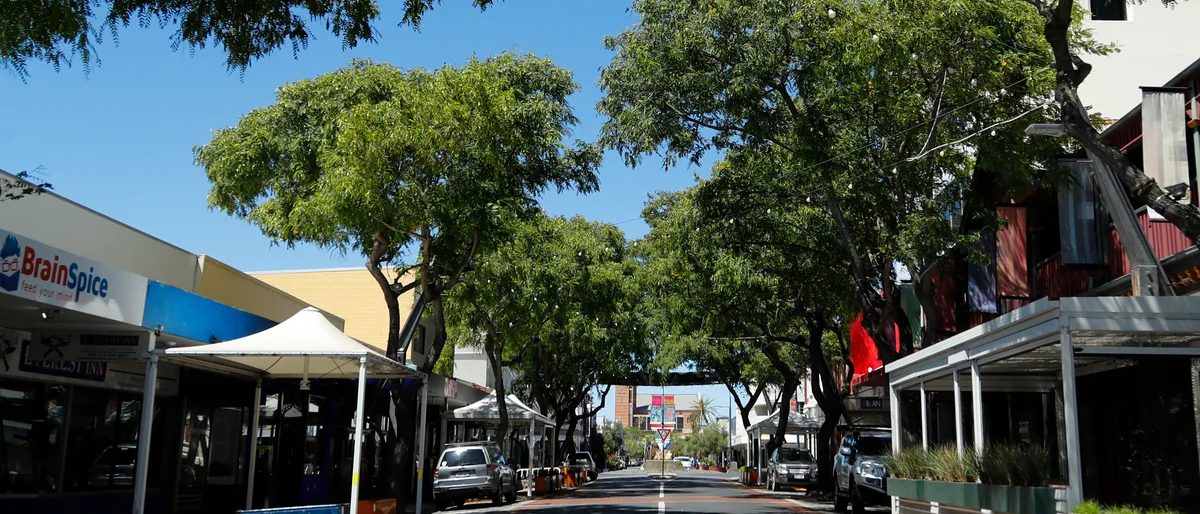
The Pickup Girls shouldn’t have to exist.
They’re retirees. They pay rates. Street cleaning is a service those rates already buy. Somewhere between the budget line and the footpath, that stopped happening reliably — and a group of women in their seventies quietly took up the slack rather than make a fuss about it.
Before anything else
This one is different, and the difference is the point.
The ocean pool has seven years of studies, a costed design and a unanimous council vote behind it. All that page has to do is push.
This is not that. This is a complaint — a very common one, made constantly, always in private. At the bakery, in the group chat, at the counter, in the comments. Everybody nods. Nobody knows whether it’s a genuine civic problem or four people with strong opinions and a good memory for how things used to look.
So this page exists to find out. If a few hundred people back it, it’s a whinge and it should be treated like one. If a few thousand do, it’s a service standard problem with a constituency, and that is a completely different conversation to have with a council.
The idea
Set a standard for the CBD, publish it, and measure against it.
Start with Victoria Street, because it’s short, it’s the front door, and hundreds of people walk the length of it every day. Not a strategy. Not a masterplan. A standard: rubbish collected on a schedule people can name, footpaths actually washed rather than blown, garden beds planted and then kept, dead plants replaced within a defined window, graffiti gone in days not seasons, broken infrastructure fixed or removed.
Written down. Attached to the Parks and Gardens team as an actual target, owned at executive level, with the result reported publicly the same way every other measure is. What gets measured gets done, and at the moment nothing is being measured because nobody has said out loud that it matters.
Then the second half, which is the interesting one: a conversation about what Victoria Street should look like. Not a $30 million redevelopment. A creative direction — planting, lighting, signage, surfaces, the small consistent decisions that separate a street that has been designed from a street that has merely accumulated.
Why it matters
Drop a chip in a dirty pub and you kick it under the table.
Drop the same chip in a restaurant with white tablecloths and you’re on your knees picking it up before you’ve finished apologising — and odds are someone in an apron beats you to it.
Same chip. Same person. Completely different behaviour. The only variable is whether the room looks like anybody cares about it.
That’s the whole argument, and it isn’t a theory about litter. It’s a theory about permission. A tired street quietly tells everybody who walks down it that standards here are optional — so people drop things, businesses stop washing their frontage, someone tags a wall and nobody paints it, and every one of those decisions makes the next one easier. A cared-for street says the opposite just as loudly, and people follow it without being asked, because almost nobody actually enjoys being the first person to lower the tone.
Pride isn’t a slogan you can put on a banner across the road. It’s a response to evidence. Give people evidence that their city is looked after and you get it for free — and it shows up in things nobody connects back to a street sweeper. People linger. They bring visitors. They open a business. They invest.
It works an hour down the road
Dunsborough is not richer than us. It is tidier than us.
A permanent population of around seven thousand, a main street you can walk in a few minutes, and a summer where the town takes on a multiple of its own size in visitors. It is spotless anyway. Gardens are tended. Bins are emptied. Tags come off. And the place behaves accordingly — people treat it well, the businesses trade well, and the investment keeps arriving.
The inputs there are not exotic. Nobody built a monument. They just decided the main street was worth maintaining and then maintained it, relentlessly, in season and out.
James Street in Brisbane went further, and is worth stealing from.
Fortitude Valley, roughly the length of Victoria Street, and until fairly recently a light-industrial pocket nobody would have called a destination. In 2010 a group of property owners formed the James Street Initiative — privately funded, non-profit — for the unglamorous purpose of looking after the street and its reputation. Today it carries over a hundred and ten retailers and gets run like an open-air shopping centre: consistent planting, consistent cleaning, outdoor speakers setting the tone, and lighting at night that was obviously designed by somebody rather than specified by somebody.
Not everything there transfers. James Street is privately managed and Victoria Street is public, which is a real difference and not a detail. But the underlying move does transfer: somebody took responsibility for how the street felt, every day, and the trade followed the feeling.
Already on the books
The City wrote this down five years ago.
The City Centre Action Plan was published in 2020. Eleven objectives, four stated values: connected, colourful, capable, confident. The first objective is to integrate, enhance and effectively maintain all movement networks throughout the city centre. Those are the plan’s own words, not ours.
And the City has been spending. Around a hundred new street trees through the Haley Street, Prinsep Street and Carmody Place works. A 4.55-hectare transformation of the Bicentennial Square precinct, running right up to the edge of Victoria Street. This is not a council that doesn’t care about its city centre — it plainly does, and it has the capital projects to prove it.
Which is exactly why the gap is so strange. It is entirely possible to spend millions on new streetscape while the existing streetscape is being swept by volunteers. Capital is exciting and gets a ribbon. Maintenance is boring and gets a line item. Guess which one quietly absorbs the cut when the budget tightens.
So this isn’t asking for a new policy. It’s asking the City to resource the verb it already committed to in writing.
The ask
Two things. One is free and overdue. The other is a conversation.
1
A published standard, owned at the top
A maintenance standard for the CBD, written down, resourced from the money already raised for it, carried as a real target by the executive rather than an aspiration in a plan. Reported publicly, so anyone can see whether it’s being met.
2
Open the creative direction up
Start a proper conversation about what Victoria Street should look and feel like — planting, lighting, surfaces, signage, sound. With the traders on it, the people who walk it, and someone whose actual job is design.
Neither of those requires a budget bid, a consultant panel or a two-year study. The first one is a decision. The second one is a meeting.
0
People who say this bothers them too
This one is a temperature check. Back it and it becomes a number somebody has to look at. Don’t, and that’s a useful answer too.
The total and the postcode split get published. Your email never does, and it never goes to a candidate, a party or a developer.
The case
against
This is an idea, not a proposal, so the objections are sharper than usual. Two of them land.
Convenient. A designer reckons the town needs more design.The first thing anyone should ask, and nobody has had to yet
Correct, and worth stating before the pledge button rather than after it. The person who built this site runs businesses here, one of which does design work. If creative direction for Victoria Street ever went to market, that’s work he could bid for.
So: no fee has been paid to anyone for this page, nobody has been engaged, and no approach has been made. If that ever changes it gets written at the top of this page, in the same size type as everything else, before anyone is asked to back anything.
The awkward part is that it doesn’t make the argument wrong. A street that looks cared for behaves better whoever happens to point it out. Discount it accordingly, and judge the first ask — the maintenance standard — entirely on its own, because there is no work in it for anybody.
Maybe people should stop throwing rubbish on the ground instead of expecting someone to follow them around.Every comment thread on this subject, without fail
Both things are true and only one of them is actionable. You cannot pass a policy that makes people better. You can absolutely change the conditions that make bad behaviour feel normal, and the evidence on that is unusually strong — clean, maintained, well-lit places get treated better by exactly the same population.
This isn’t about absolving anyone. It’s that “people should be better” has been the strategy for a decade and the Pickup Girls are still out there at seven in the morning.
So the answer is more money to the council. There’s a surprise.Fair suspicion, wrong target
The ask is explicitly not for more money. Street cleaning and public landscaping are already funded from rates — this is about whether that funding produces a result anybody can point to, and whether there’s a published standard to judge it by.
If it turns out the service genuinely can’t be delivered on the current budget, that is an extremely useful thing to discover in public. Right now nobody can tell, because no standard exists to fall short of.
Dunsborough has tourist money and James Street has landlords with a marketing budget. Bunbury is a working city. Different job entirely.The strongest objection here
This one lands. James Street is privately managed by a body corporate of property owners who all benefit directly from it looking good — a coordination advantage a public street simply does not have. Dunsborough’s economy is built on people choosing to be there, which makes appearance a commercial necessity rather than a nicety. Bunbury is a regional centre that has to work on a wet Wednesday in July, and that is a harder brief.
Where the comparison holds: none of the things being asked for are exotic. Empty the bins, wash the footpath, tend the beds, remove the tags, and decide what the street is meant to look like. Those are the same actions at any scale and any budget. The difference between here and there isn’t money — it’s whether anybody owns the outcome.
Housing, hospital waiting lists, cost of living — and you’re worried about garden beds.Raised whenever anything visual is discussed
It’s a fair reordering of priorities and it also proves too much. By that standard a local council should never do anything that isn’t an emergency, which is not how a city gets built or kept.
Street maintenance is also one of the very few things a local government actually controls. It can’t fix interest rates or staff the hospital. It can absolutely decide whether the main street looks looked-after, and it’s already being paid to.
The blokes doing the work aren’t the problem. Don’t put a target on their backs.From someone who has worked in local government
Agreed, and this is the version of the idea most likely to go wrong. Crews are not the problem here — resourcing, scheduling and priority are, and all three are set well above them.
So the target belongs at executive level, where the trade-offs actually get made, and the measure should be the state of the street rather than the number of bins emptied per hour. Measure the outcome and you get a clean street. Measure the activity and you get a crew being timed while the street stays the same.
Go and
check
The plan, the spending, and the street that did it properly.
Bicentennial Square
The 4.55-hectare precinct transformation running up to the edge of Victoria Street.
Haley, Prinsep & Carmody
The completed streetscape works, and the City’s own statement of the City Centre Action Plan vision.
James Street Initiative
How a group of Brisbane property owners turned an industrial pocket into the country’s best-run retail street.
James Street on Instagram
Easier than any argument. Scroll it and you can see what a street looks like when somebody is responsible for how it feels.
Be one of the people
0on the list
Ideas like this one only work if enough people turn up at once. Get on the list and you’ll hear when the next one goes live.
Email and postcode. Nothing else, ever.
One email per project. No newsletter. Leave whenever.