Change the
damn food
truck laws
Victoria Street has more empty shops than it should and fewer places to eat than it needs. Meanwhile the cheapest, lowest-risk way anyone has ever invented to start a food business is being priced and permitted out of town.
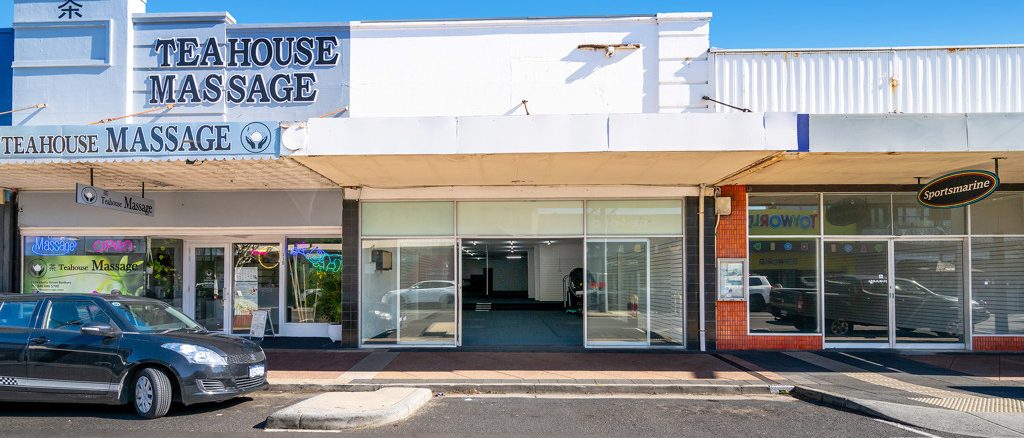
It’s $160 next door. It’s $1,204 here.
Shire of Dardanup, 2025–26: a hundred and sixty dollars a year and you can trade across the shire. City of Bunbury, same year: twelve hundred and four dollars a year for a stationary licence in the CBD, per location. Want a second spot? Pay again. That is the entire policy difference between a town that gets food trucks and one that doesn’t.
What this is
An idea with receipts.
Like the street cleaning one, this started as a complaint people make constantly and privately. Unlike that one, it took about ten minutes to find out the complaint is measurably true — both councils publish their fees, and the gap is not subtle.
So the facts aren’t really in question. What’s being tested here is whether the appetite is. Because a fee schedule is one of the few things a council can change in an afternoon, and the only thing that usually stops it is nobody asking.
Why it matters
A shop fitout is a bet you can only place once.
Lease, bond, kitchen, extraction, grease trap, fitout, permits, staff. Hundreds of thousands of dollars and a personal guarantee, wagered on a hunch that people will like your food. Get it wrong and you don’t get a second go, and we all know the names of the places that got it wrong, because we all ate there once and meant to go back.
This is exactly the problem food trucks solved, everywhere in the world, about fifteen years ago. Lower overheads, lower risk, and — the part that actually matters — a way to test an idea in public before betting the house on it. Most great small venues now start in a trailer. The trailer isn’t the destination. It’s the proving ground, and a town with no proving ground ends up with no new venues.
Which is worth sitting with for a second. Every empty shopfront on Victoria Street is a room waiting for someone with an idea. And the cheapest way to find out whether that person’s idea is any good is to let them park a trailer on the street for a few hours and see if a queue forms.
The numbers
Both councils publish this. Neither is hiding anything.
In the Shire of Dardanup — which starts a few kilometres from the Bunbury CBD and is functionally a suburb of the same town — a street trader’s licence is $88 to apply and $160 a year. Or $11 a day if you just want to try it. The Shire’s own application form lists $92 and $168; either schedule you read, the comparison holds.
In the City of Bunbury, an $87 application gets you a choice. A roaming licence is $501 a year. A stationary licence is $1,003 a year for one location — and $1,204 a year if that location is the CBD or Marlston Waterfront. Per location. Daily rates run $37 a day in the CBD against Dardanup’s $11.
So the same trailer, doing the same thing, in a town that is continuous with itself, faces a 7.5× difference in annual licence cost depending on which side of an invisible line it parks.
And the fee, it turns out, is the mild half of the problem.
What the law says
Four clauses explain the whole thing.
Both councils govern this with a local law. Bunbury’s is the Public Places and Local Government Property Local Law 2020. Dardanup’s is the Activities in Thoroughfares and Public Places and Trading Local Law 2009. They were drafted eleven years apart and they are not the same document.
One. You nominate a place, singular.
Bunbury requires an application to “specify the location” for the licence, and then makes it an offence for a licensee to trade “in a place other than that specified in the licence”. Dardanup asks a trader to specify “the location or locations” — and its permit conditions can cover “the place, the part of the district, or the thoroughfare”. One word, plural, and the whole business model changes.
Two. There’s a 300-metre exclusion zone.
Bunbury’s conditions may limit a trading area to “not less the 300 metres from an established outlet selling similar goods”. Read that against Victoria Street, where there is an established outlet selling similar goods roughly every forty metres. A 300-metre radius doesn’t restrict where a food truck can park in the CBD. It removes the CBD.
Dardanup’s local law has no equivalent clause at all.
Three. The licence expires on a fixed date.
A Bunbury licence is valid “between the date of issue and the following 31 August”. A Dardanup permit is valid “for one year from the date on which it is issued”. Which means the value of Bunbury’s $1,204 annual licence depends entirely on what month you happen to apply — and if you want to start trading in winter, you are buying a very expensive few months.
Four. Noise is an offence, not a vibe.
A Bunbury licensee must not “create any noise or disturbance to the annoyance of nearby occupants or passers-by”. Fair enough at 11pm outside a house. But as drafted it also covers a speaker on a footpath at 6pm on a Friday, which is the exact thing that makes a row of trucks feel like somewhere to be rather than a queue in a car park.
None of this was designed to stop food trucks. It was written before food trucks were a thing anybody was thinking about, and it has simply never been revisited. That is not a scandal. It’s just what an old document does when nobody reads it against what the town needs now.
The idea
Let them park, let them stay, and let them park together.
Park anywhere sensible. One annual permit, not one permit per parking bay. If a spot is legal to park in and safe to trade from, it should be available. The whole point of a food truck is that it can go where the people are — a licence that pins it to a nominated square of asphalt has removed the only advantage it had.
Trade for as long or as short as you like. Two hours on a Thursday. All weekend. Six weeks and then never again because it didn’t work. That flexibility is the product. Locking a vendor into fixed hours at a fixed site turns a nimble business into a very small, very hot restaurant with no walls.
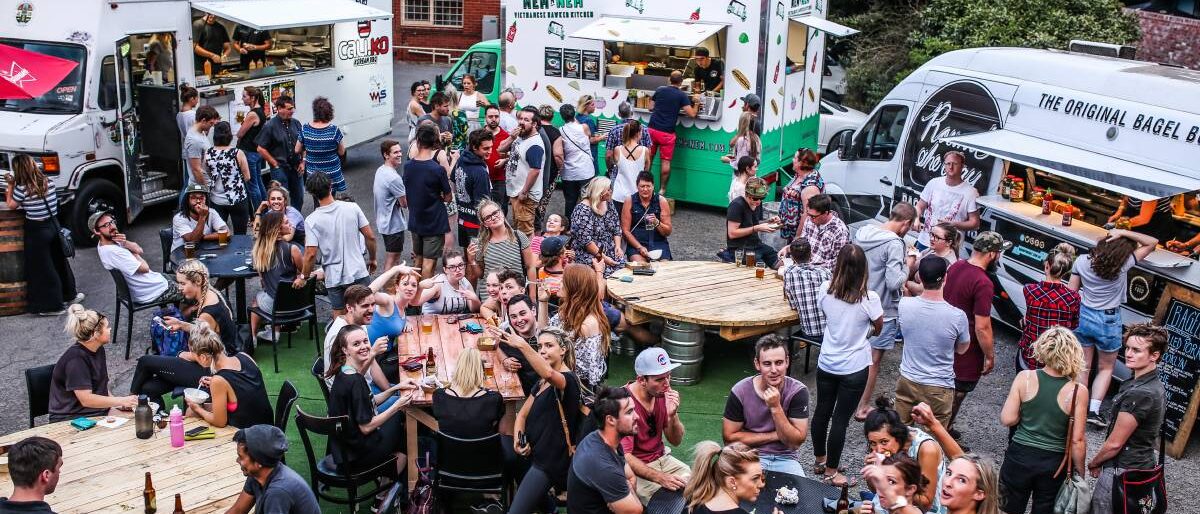
Let them park next to each other. This is the one that makes no sense at all. Two trucks side by side is somehow a festival requiring an event application, while two trucks a hundred metres apart is fine. Except a row of four trucks is the thing people actually drive into town for. Why does it require a permit and a committee to let that happen on a Friday?
Then go further and designate. Pick the spots. Friday to Sunday in the CBD, a defined area where multiple trucks are encouraged rather than tolerated. Power, bins, a few milk crates, someone’s speaker. Not an event — a standing arrangement people can rely on, which is the difference between a novelty and a habit.
The actual argument
People attract people. But people need an attraction.
Nobody drives into town to look at a street. They come for a reason, and then they walk. And while they’re walking they pass the retailer they’d forgotten about, and the pub they haven’t been to in a year, and the shop with the thing in the window. That is what activation actually is — not a banner and a stage, but a reason to be in a place, repeatedly, at a predictable time.
The cost-of-living part is not a footnote. For a family of five, a restaurant is a real decision weighed against the mortgage. A box of chips, free music and a walk through town is the same night out without the same arithmetic. Right now that option barely exists here, and it should.
And here’s the part the restaurants keep missing.
There is a hard limit to how many paper-wrapped burgers a person can eat standing up in a car park. Sooner or later — usually around the third weekend — somebody says “stuff this, let’s go somewhere with chairs.” And they walk fifty metres and discover a restaurant that has been quietly excellent for twenty-five years and that they had somehow never been to.
Food trucks don’t take that customer away. They’re the thing that brought them into town in the first place.
To the venue owners
Said as someone who has run one.
The objection is coming and it deserves a straight answer, so here it is. You pay rent. You pay rates. You carry staff, insurance, compliance and a fitout you’re still paying off. Someone rocks up in a trailer with none of that and parks out the front. It feels unfair, and the feeling is real.
But look at what they’re actually doing. Prepping at home. Loading a van. Standing in a steel box in February, sweating, lugging their own supplies, serving out of a window into a cardboard tray with no dining room, no liquor licence, no repeat bookings and no roof when it rains. That is not an easier version of your job. It’s a harder one with a lower ceiling.
And if someone can beat your kitchen from inside a 2×4 trailer, the problem isn’t the trailer.
The honest version of this is that a struggling venue on Victoria Street is not struggling because of food trucks. It’s struggling because there aren’t enough people on Victoria Street. Those are opposite problems with opposite solutions, and one of them is fixable this year.
You were them once. At home, testing recipes, imagining strangers eating your food and liking it. Keeping the next one out doesn’t protect what you built — it just guarantees the street stays as quiet as it is now.
And about Gage Roads
“What we really need is a big brewery to open here.”
Heard constantly, and it has the logic backwards. Nobody with a national brand and a finance committee opens a venue in a town to create demand. They open where demand is already visible, because that’s what the business case needs — proof that people show up, spend, and come back.
Which means the fastest route to the venue everyone says they want is not a letter to a brewery. It’s a street that’s visibly busy on a Friday night. Twenty trailers over two years, a few of them graduating into those empty shops, and the investment conversation changes on its own.
Local demand first. External investment follows. It has never once worked in the other order.
The ask
Three things, all of which live inside the City’s existing powers. None of them needs a state grant or a masterplan.
1
Make it locations, plural
Amend the application clause so a permit covers the locations, or the part of the district, a vendor proposes to trade in — the way Dardanup’s already does. One permit, several spots, no second fee.
2
Drop the 300-metre rule in the CBD
A 300-metre exclusion from any outlet selling similar goods is a CBD-wide ban with extra steps. If proximity protection is wanted, make it a sensible distance and apply it deliberately, not as a discretionary condition nobody has looked at since 2020.
3
Twelve months from issue, not 31 August
An annual licence should run a year. Right now what $1,204 buys depends on the month you walk in, which is the kind of quiet unfairness that only survives because almost nobody applies.
4
Reset the fee, and designate a spot
Bring the licence into line with what the shire next door charges — that’s a budget line item, so 2026/27 is the target. Then name a CBD location, Friday to Sunday, with power and bins, where trucks are encouraged to trade side by side rather than needing an event application to do it.
The relevant instrument is the City’s Public Places and Local Government Property Local Law 2020, plus the annual fees and charges schedule. Neither requires anyone’s permission but council’s.
0
People who want this changed
Fees get set once a year. A number attached to this before the next budget is worth more than the same number after it.
The total and the postcode split get published. Your email never does, and it never goes to a candidate, a party or a developer.
The case
against
One of these is a genuine correction to the argument above. It’s first.
There’s a roaming licence for $501. You’ve compared the most expensive option here to the cheapest option there.Fair, and the first thing anyone at the City will say
Correct, and it’s in the numbers section above rather than buried. Bunbury does offer a roaming licence at $501 a year. That’s still triple Dardanup’s $160, but it’s not $1,204 and the page shouldn’t pretend otherwise.
What roaming doesn’t buy is the thing that makes a food truck work: pulling up in one good spot and staying there for four hours on a Friday night while a queue builds. That’s a stationary licence, priced per location, at $1,204 in the CBD.
And the local law constrains both. It requires an application to “specify the location”, and makes it an offence for a licensee to trade “in a place other than that specified in the licence”. The 300-metre condition applies either way. So the cheaper licence doesn’t escape the problem — the problem is upstream of the fee, in a clause that assumes one vendor, one spot.
Anyone who administers these licences and knows how they work in practice should say so. If any of this is wrong it gets corrected here with a note saying what changed.
I pay rent, rates, staff and a fitout. They pay a permit and park out the front of my shop. Explain how that’s fair.The strongest objection here, and it comes from people who took a real risk
It isn’t a level playing field, and it never has been in either direction. A venue has seats, a roof, a liquor licence, bookings, air conditioning and a customer who can sit down. A trailer has a window and the weather. Those are different businesses with different ceilings, and the trailer’s ceiling is much lower.
Where this deserves a real concession: proximity rules are a reasonable thing to argue about. Plenty of councils restrict trading within a set distance of an open venue selling similar food. That’s a legitimate lever and worth negotiating rather than dismissing.
What isn’t reasonable is using the fee schedule as a moat. If the policy goal is protecting incumbents, say so out loud and let the town decide whether it agrees. Don’t do it quietly through a licence cost.
Rubbish, grease, generators running at 11pm, taking up parking bays all weekend, smoke through someone’s front window.Every practical objection, and all of them have happened somewhere
“Anywhere sensible” is doing real work in that sentence and should be spelled out. Legal parking only. Bins provided and taken away. Noise limits after a stated hour. No trading in residential streets past a certain time. No blocking a driveway, a crossing or a loading zone.
None of that is exotic — it’s the standard condition set in every council that already does this well, including the one next door, which has managed roaming food vehicles for years without the sky falling in. The argument is about price and flexibility, not about abolishing rules.
Mostly true, and mostly beside the point. The operator lives somewhere, and a good share of them live here and pay rates on a house. More importantly, the money a truck attracts into the CBD doesn’t stay in the truck — it lands in the shops, the pubs and the venues that do pay commercial rates, which is the entire mechanism being proposed.
If the concern is genuinely about cost recovery, the honest fix is a permit priced to cover administration and bin collection. That’s a long way south of $1,204.
This works in Brisbane. It’s twelve degrees and horizontal here for four months of the year.A very Bunbury objection
Half right. Winter trade will be thin, and any vendor who has done the sums already knows it — that’s their risk to carry, not the council’s to pre-empt on their behalf.
The other half is that this town gets about six months of weather other places would put on a postcard, and currently does almost nothing with the evenings. Even a seasonal version of this beats the current arrangement, which is nothing at all.
Vacancy is about rents and online shopping. A burger van isn’t going to change that.Largely true, and worth conceding
It won’t, on its own. Retail vacancy is driven by rents, structural change and a decade of shopping habits that nothing on this page touches.
What it does change is foot traffic, and foot traffic is the one input every retailer, landlord and prospective tenant looks at first. This isn’t the whole answer. It’s the cheapest available piece of it, and unlike the others it can be done by amending a schedule.
Read their local law properly. A trader can be told to move on as soon as there’s no one buying. That’s not “park wherever you like”.Correct, and it belongs on this page
True. Dardanup’s law allows a condition that a trader may stay at a location only while a customer is actually purchasing, and must move on within a reasonable time of the last sale. That’s an itinerant model — built for a van going street to street, not a trailer holding a corner for four hours.
So neither council has the thing being asked for here. What Dardanup has is cheaper, permits plural locations, runs a full year from issue, and carries no proximity exclusion. It’s a better starting point, not a finished answer — and the version worth arguing for borrows from it rather than copying it.
Worth stating plainly. The person behind this site has previously owned and run a hospitality venue in this region, and runs a design business here. No food truck, no trailer, no application pending, and nothing to sell if this changes.
The venue history cuts both ways and you should weigh it however you like: it’s why the section addressed to venue owners exists, and it’s also why the “level playing field” objection got a real answer instead of a brush-off.
Go and
check
Both fee schedules are public. Read them side by side — it takes two minutes and it’s more persuasive than anything on this page.
Bunbury fees, 2025–26
Roaming, stationary and CBD licence fees, per location, on the Commonwealth’s own business licence service.
Dardanup fees, 2025–26
The same page for the shire next door. $88 to apply, $160 a year, and a dedicated food vehicle permit form.
Bunbury’s local law
Public Places and Local Government Property Local Law 2020. Part 8, Division 2 is the one. Clauses 8.17, 8.19, 8.21 and 8.24 are where everything above comes from.
Dardanup’s local law
Activities in Thoroughfares and Public Places and Trading Local Law 2009. Part 5 for the trading provisions — read clause 5.3 next to Bunbury’s 8.17.
Dardanup’s food vehicle form
Two pages. Fees on the back. A permit valid one year from the date it’s issued. This is what the alternative actually looks like.
How to apply today
The City’s street trading page, for anyone who wants to do this under the rules as they currently stand.
Be one of the people
0on the list
Ideas like this one only work if enough people turn up at once. Get on the list and you’ll hear when the next one goes live.
Email and postcode. Nothing else, ever.
One email per project. No newsletter. Leave whenever.